
Content by Hannah Gale, Greyfel Designs LLC
Scratch Culinary Meal Prep, Phoenix, AZ

Roughly one in eight American adults has now taken a GLP-1 medication. Ozempic, Wegovy, Mounjaro, Zepbound. The names have become part of everyday conversation in a way that very few prescription medications ever have. The pharmacology works. Appetite drops. The scale moves.
What hasn’t kept up is the food advice.
Most people starting a GLP-1 medication get a handout about staying hydrated and eating smaller portions. What they don’t get is a practical answer to the question that actually matters. when your appetite is cut by 30 to 50 percent and every bite has to count for more, what should those bites actually be?
What GLP-1 Medications Do to Your Appetite and Digestion
GLP-1 receptor agonists work by mimicking a hormone your gut releases after eating. They slow gastric emptying, prompt insulin release, and significantly suppress appetite. The result is that food sits in your stomach longer than it used to, portions that once felt small now feel like a full meal, and some days eating feels like a chore rather than something your body is asking for.
Three things follow from this that have direct nutritional consequences. Total food intake drops, sometimes dramatically, which means the quality and density of each meal matters far more than it did before. Fiber intake often falls alongside total volume, which contributes to constipation, the most commonly reported GLP-1 side effect. And protein, the one macronutrient most critical to preserving what your body has built, is the easiest to undereat when appetite is suppressed and meals feel like work.
An analysis of people in their first year of GLP-1 therapy found that more than one in five received a nutritional deficiency diagnosis within twelve months. Vitamin D was the most common, appearing in 13.6 percent of patients. This gets far less attention than it deserves.
Why Muscle Preservation Is the Real Goal
The most underreported finding in GLP-1 research is what the weight loss is actually made of.
Research from the STEP 1 semaglutide trial found that a meaningful portion of total weight lost on GLP-1 medications comes from lean mass, not just fat. This means people can lose significant muscle alongside the fat they are trying to shed. Without adequate protein intake and strength training, that muscle does not come back on its own.
Muscle is not just an aesthetic concern. It is metabolically active tissue that drives energy expenditure, supports insulin sensitivity, and becomes increasingly difficult to rebuild with age. Losing it during GLP-1 therapy and never addressing the deficit is one of the most common reasons people feel weaker, more fatigued, and less capable after treatment than they expected.
The solution is not complicated. It is consistent, high-protein eating at every meal, even when appetite makes that feel like the last thing you want to do.
What a GLP-1-Optimized Meal Actually Looks Like
The framework is straightforward: protein first, then produce, then a smart complex carbohydrate, with moderate fat. Every meal should anchor around at least 25 to 35 grams of protein from a whole food source, paired with fiber-rich vegetables or legumes that support gut motility without adding significant volume.
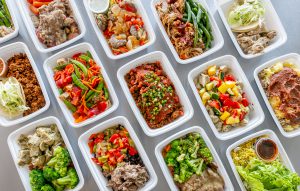
Practically, that looks like a Greek Chicken Bowl built around grilled chicken breast over seasoned rice and greens. It looks like a Steak Fajita Bowl with lean flank steak, peppers, and whole grain base. It looks like a Turkey Bolognese Pasta where the protein density is built into the sauce rather than sitting on the side. These are not compromise meals. They are exactly the architecture that GLP-1 nutrition research supports.
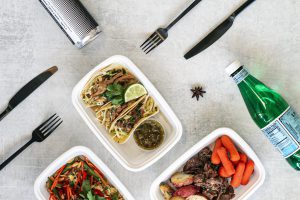
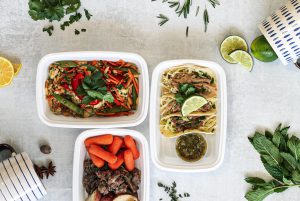
Scratch Culinary’s fall menu was built around this kind of protein-forward, whole ingredient cooking. Chef Tom D’Ambrosio, a Food Network Chopped Champion, designs every dish from locally sourced proteins and produce with no preservatives. The macros are printed on the front of every container. For GLP-1 users who need to know exactly what is in each meal without doing the math themselves, that transparency is not a convenience feature. It is a clinical necessity.
Why Scratch Culinary Works for GLP-1 Users in Phoenix
Three things make a meal prep service genuinely useful for someone on a GLP-1 medication, and Scratch Culinary covers all of them.
Portion control is built in. Meals come in sizes from 300 to 700 calories, designed for exactly the kind of reduced-appetite eating GLP-1 users experience. There is no guessing about whether a meal is sized appropriately for a smaller stomach.
Nutrient density is non-negotiable. Every dish is built from whole, locally sourced ingredients with no fillers or preservatives, which means the food arriving in the container has the vitamin and mineral content your body needs when total intake is lower than it used to be.
And tracking is effortless. The MyFitnessPal barcode integration means logging a meal takes one scan. For GLP-1 users trying to hit protein targets on a reduced appetite, seeing the numbers in real time matters.
Fresh deliveries arrive every Monday and Wednesday across the Phoenix metro, from Carefree to Queen Creek and Surprise to Buckeye. Meals heat in under three minutes. At around ten dollars per meal, it is one of the most practical nutrition decisions available for anyone navigating GLP-1 therapy in the Valley.
Browse the current fall menu here and see what this week’s rotation includes. If you have questions about dietary preferences, protein content, or delivery to your area, the FAQ page covers it, and the team is reachable directly.
Get started today. Every bite counts more now. Make them count for something.
Frequently Asked Questions
What should you eat on Ozempic or Wegovy to avoid muscle loss? GLP-1 users should prioritize 25 to 35 grams of high-quality protein at every meal to preserve lean muscle mass during weight loss. Research from the STEP 1 semaglutide trial found that a significant portion of weight lost on GLP-1 medications can come from lean mass rather than fat. Whole food protein sources including grilled chicken, lean beef, turkey, and fish are recommended over processed alternatives. Always consult your prescribing physician or a registered dietitian for personalized guidance.
Is meal prep delivery a good option for GLP-1 medication users? Yes, for several reasons. GLP-1 medications reduce appetite significantly, which means total food intake drops and nutrient density per meal becomes critical. Pre-portioned, macro-labeled meals remove the guesswork around whether you are eating enough protein, and they make consistent, high-quality eating possible on days when cooking feels like too much effort. Scratch Culinary delivers fresh, chef-prepared, macro-labeled meals across the Phoenix metro every Monday and Wednesday.
What are the most common nutritional deficiencies on GLP-1 medications? An analysis of GLP-1 patients in their first year of therapy found that more than one in five received a nutritional deficiency diagnosis within twelve months. Vitamin D was the most common deficiency, appearing in 13.6 percent of patients within twelve months. Reduced total food intake on GLP-1 therapy means that every meal needs to carry more nutritional weight than it did before treatment.
What makes Scratch Culinary different from ‘GLP-1 Friendly’ packaged foods at the grocery store? The “GLP-1 Friendly” label appearing on packaged grocery products currently has no regulatory definition. Some products carrying this label are low-calorie processed foods with minimal protein and inadequate fiber. Scratch Culinary meals are prepared fresh by a chef from locally sourced, preservative-free ingredients, with macros printed on every container and consistent protein anchoring in every dish.
Does Scratch Culinary deliver to my area in the Phoenix metro? Scratch Culinary delivers every Monday and Wednesday across the Phoenix metro area from Carefree to Queen Creek and Surprise to Buckeye, including Scottsdale, Tempe, Mesa, Gilbert, Chandler, Glendale, and Peoria. Kitchen pickup is also available. Full delivery area details are on the FAQ page.
How many calories and how much protein are in Scratch Culinary meals? Meals are available in sizes from 300 to 700 calories depending on the dish and your plan preferences. Every container has the full macro breakdown printed on the label, including protein, carbohydrates, and fat. For subscribers using MyFitnessPal, the barcode scan integration logs all nutritional data automatically.
This post is for informational purposes only and does not constitute medical advice. Always consult your prescribing physician or a registered dietitian before making significant changes to your diet while on a GLP-1 medication.
Scratch Culinary is Phoenix’s chef-driven, subscription-based meal prep and delivery service. Seriously fresh. Nutritionally focused. Made from scratch, every week. Serving the entire Phoenix metro area including Scottsdale, Tempe, Mesa, Gilbert, Chandler, Glendale, Peoria, and beyond.