
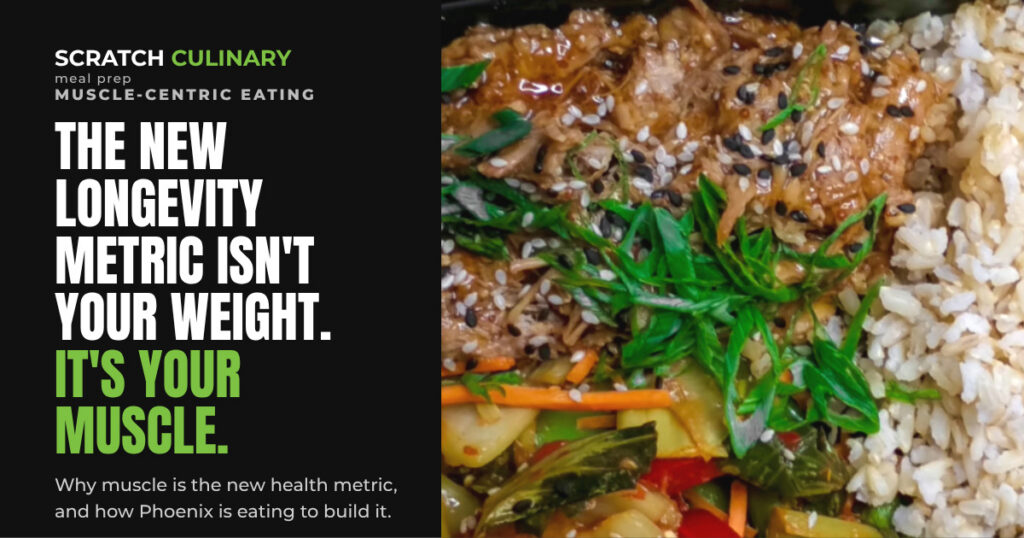
The conversation around living longer has shifted. Not quietly and not gradually. Research that used to live in sports medicine and geriatrics is now showing up in mainstream health coverage, and the finding is consistent enough that it is hard to ignore: the single strongest predictor of long-term health outcomes is not body weight, cholesterol, or even cardiovascular fitness. It is muscle mass and the strength to use it.
Dr. Peter Attia, Dr. Gabrielle Lyon, and a growing body of longevity researchers have made this case with enough clinical specificity that “muscle-centric medicine” now has its own following outside academic circles. The data behind it is not new. What is new is that it has reached people who are actively changing how they eat because of it.
Why Muscle Is the Longevity Organ
Skeletal muscle is metabolically active in ways that fat tissue is not. It drives glucose uptake independently of insulin, which directly affects long-term blood sugar regulation and metabolic health. It produces myokines, signaling proteins released during contraction that reduce systemic inflammation and support brain, bone, and cardiovascular function. It is the primary tissue the body draws on during illness, injury, and aging when reserves are needed.
Sarcopenia, the age-related loss of muscle mass and strength, begins earlier than most people expect. Research suggests measurable decline starts in the mid-thirties in people who are not actively training and eating to counter it. By the time sarcopenia becomes clinically visible, it has been progressing for years.
The intervention is consistent, high-protein eating and resistance training maintained across decades, not a six-week program. The earlier someone builds the habit, the longer the asset compounds.
What Muscle-Centric Eating Actually Looks Like
The nutritional framework is straightforward: 0.7 to 1 gram of protein per pound of body weight per day, distributed across meals rather than loaded into one sitting. Each meal anchors around a whole food protein source large enough to trigger the leucine threshold that initiates muscle protein synthesis, typically 25 to 40 grams.
That looks like a Steak Fajita Bowl with lean flank steak over a whole grain base. It looks like a Greek Chicken Bowl with grilled chicken breast and seasoned greens. It looks like a Tuscan Chicken dish built around a dense, herb-forward protein serving. These are the meals that stack the daily protein target without requiring the math.
Scratch Culinary’s fall menu was designed around this kind of protein-forward, whole ingredient cooking. Chef Tom D’Ambrosio, a Food Network Chopped Champion, builds every dish from locally sourced proteins and produce with no preservatives. Macros are printed on every container, and the MyFitnessPal barcode integration logs everything automatically.
Fresh deliveries every Monday and Wednesday across the Phoenix metro, from Carefree to Queen Creek and Surprise to Buckeye, at around ten dollars per meal. See this week’s menu and get started today.
Frequently Asked Questions
Why is muscle considered a longevity marker?
Skeletal muscle mass and grip strength are among the strongest predictors of long-term health outcomes in longevity research. Muscle drives glucose metabolism, produces anti-inflammatory signaling proteins called myokines, and serves as a metabolic reserve the body draws on during illness and aging. Higher muscle mass is associated with lower all-cause mortality across multiple large population studies.
When does muscle loss start?
Research indicates measurable loss of muscle mass and strength can begin as early as the mid-thirties in adults who are not actively training and eating to preserve it. Sarcopenia, the clinical term for age-related muscle loss, progresses gradually over decades before becoming functionally significant.
How much protein do you need for longevity and muscle preservation?
Longevity and sports medicine researchers including Dr. Gabrielle Lyon and Dr. Peter Attia typically recommend 0.7 to 1 gram of protein per pound of body weight per day, distributed across three to four meals. Each meal should anchor around at least 25 to 40 grams of protein from a whole food source to trigger muscle protein synthesis effectively.
Can meal prep support a muscle-centric eating strategy?
Yes. Pre-portioned, macro-labeled meals remove the daily friction of hitting protein targets consistently. Scratch Culinary delivers chef-prepared, high-protein, whole ingredient meals across the Phoenix metro every Monday and Wednesday, with the full macro breakdown on every container and MyFitnessPal barcode scanning for automatic logging.
Does Scratch Culinary deliver in my area of Phoenix?
Scratch Culinary delivers every Monday and Wednesday across the Phoenix metro area including Scottsdale, Tempe, Mesa, Gilbert, Chandler, Glendale, and Peoria, from Carefree to Queen Creek and Surprise to Buckeye. Kitchen pickup is also available. Full details are on the FAQ page.
Scratch Culinary is Phoenix’s chef-driven, subscription-based meal prep and delivery service. Seriously fresh. Nutritionally focused. Made from scratch, every week. Serving the entire Phoenix metro area including Scottsdale, Tempe, Mesa, Gilbert, Chandler, Glendale, Peoria, and beyond.