
About 1 in 8 women in the United States will develop invasive breast cancer at some point in their lifetime. That figure, cited by the American Cancer Society, is sobering and familiar. What is less talked about is the part of that picture that lifestyle and nutrition research has been quietly building a case around for decades.
Breast cancer is not a single disease with a single cause. Genetic risk, age, hormonal history, and environmental factors all contribute in ways that vary from person to person. But the American Cancer Society’s guidelines for cancer prevention are clear on this: achieving and maintaining a healthy weight, being physically active, limiting alcohol, and eating a diet rich in vegetables, fruits, and whole grains are all associated with reduced cancer risk. These are not alternative medicine. They are the findings of decades of population research.
October is the right time to hold both things at once: the weight of what this disease means to so many people, and the agency that comes with knowing what consistent, whole food eating does for long-term health.
What the Research Links to Reduced Risk
The dietary patterns consistently associated with lower breast cancer risk are not complicated or restrictive. They share a few key features.
Fiber intake has drawn particular attention. A large analysis published in the Breast Cancer Research Foundation’s research network found that higher fiber consumption was associated with reduced breast cancer risk, particularly in premenopausal women. Fiber from whole food sources, including legumes, whole grains, and cruciferous vegetables, appears to support estrogen metabolism and gut microbiome function in ways that affect hormonal balance over time.
A predominantly plant-forward diet, built around a wide variety of vegetables, fruits, and whole grain carbohydrates, is associated with lower inflammation markers and better long-term metabolic health. The Susan G. Komen foundation’s nutrition resources draw the same connection, pointing toward whole, minimally processed foods and away from ultra-processed products as part of a health-forward dietary pattern.
Alcohol is the one dietary factor with the most direct research link to increased breast cancer risk. Limiting or avoiding it is one of the most evidence-backed lifestyle choices a woman can make.
None of this is a prevention guarantee. It is what the research supports, clearly and consistently, as part of a long-term approach to health.
How Whole Food Meal Prep Fits In
A dietary pattern associated with reduced cancer risk is not a special diet. It is a whole food diet, consistently maintained, that is heavy on vegetables, legumes, and whole grains and light on processed ingredients and additives.
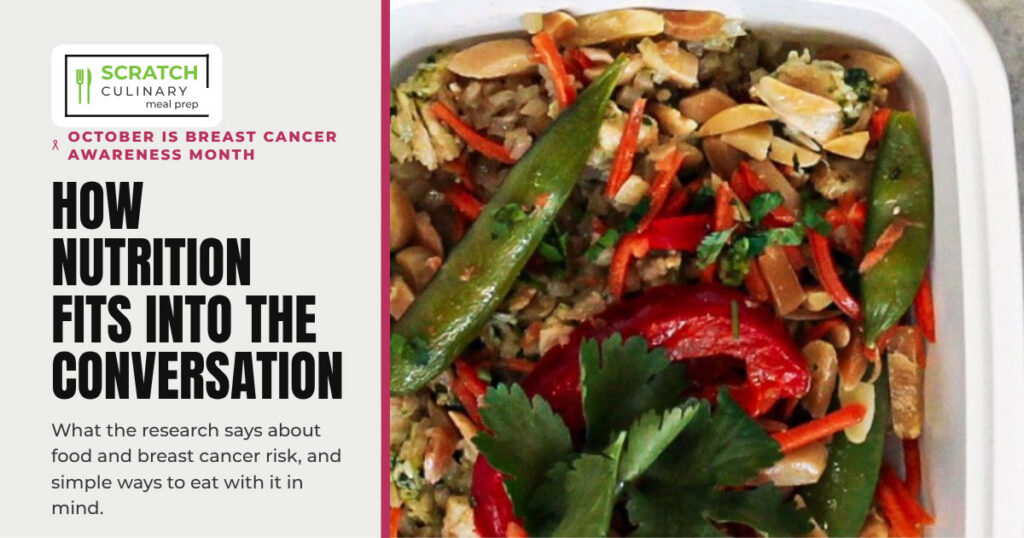
That is exactly how Scratch Culinary builds its meals. Chef Tom D’Ambrosio, a Food Network Chopped Champion, designs every dish from locally sourced produce and proteins with no preservatives and no fillers. The Greek Chicken Bowl layers grilled chicken with leafy greens and seasoned whole grain rice. The Pineapple Pork Bowl builds fiber and anti-inflammatory compounds from fresh whole ingredients. The Turkey Bolognese Pasta carries fiber from both the sauce base and the whole grain pasta itself.
These are not cancer-prevention meals. They are the kind of real, whole food eating that the American Cancer Society and cancer research organizations point toward when they describe the dietary patterns associated with long-term health.
Macros and fiber content are printed on every container. The MyFitnessPal barcode integration logs everything automatically. Fresh deliveries every Monday and Wednesday across Phoenix, from Carefree to Queen Creek and Surprise to Buckeye, at around ten dollars per meal.
Browse the current menu and get started today. The best thing you can do for your long-term health is make consistent, whole food eating easy. That is the whole point.
Frequently Asked Questions
What does nutrition have to do with breast cancer risk?
The American Cancer Society’s cancer prevention guidelines identify diet as a modifiable risk factor. Diets high in vegetables, fruits, whole grains, and fiber, and low in ultra-processed foods and alcohol, are associated with reduced breast cancer risk in large population studies. Nutrition does not guarantee prevention but is one of the most evidence-supported lifestyle factors within a person’s control.
What foods are associated with lower breast cancer risk?
Research consistently points to whole, plant-forward foods including cruciferous vegetables, leafy greens, legumes, berries, and whole grains. High fiber intake has been associated with reduced risk particularly in premenopausal women, according to research supported by the Breast Cancer Research Foundation. Limiting alcohol is among the most evidence-backed lifestyle recommendations for risk reduction.
Is there a specific diet that prevents breast cancer?
No specific diet has been proven to prevent breast cancer. What research supports is a dietary pattern: predominantly whole, minimally processed foods, rich in fiber and plant diversity, low in alcohol and ultra-processed ingredients. The Susan G. Komen foundation’s nutrition resources reflect this same pattern as part of an overall approach to long-term health.
How can consistent meal prep support long-term health habits?
Consistency is the operative word in nutrition research. One-week cleanses and elimination diets do not produce the long-term dietary patterns that population health research measures. Chef-prepared, whole ingredient meals delivered twice a week remove the friction that causes people to fall back on processed, convenient options. The habit compounds over months and years.
Does Scratch Culinary deliver across Phoenix?
Yes. Scratch Culinary delivers every Monday and Wednesday across the Phoenix metro area including Scottsdale, Tempe, Mesa, Gilbert, Chandler, Glendale, and Peoria, from Carefree to Queen Creek and Surprise to Buckeye. Kitchen pickup is also available. Full details are on the FAQ page.
For information about breast cancer prevention, screening, and support resources, visit the American Cancer Society, Susan G. Komen, or the Breast Cancer Research Foundation.
Scratch Culinary is Phoenix’s chef-driven, subscription-based meal prep and delivery service. Seriously fresh. Nutritionally focused. Made from scratch, every week. Serving the entire Phoenix metro area including Scottsdale, Tempe, Mesa, Gilbert, Chandler, Glendale, Peoria, and beyond.