

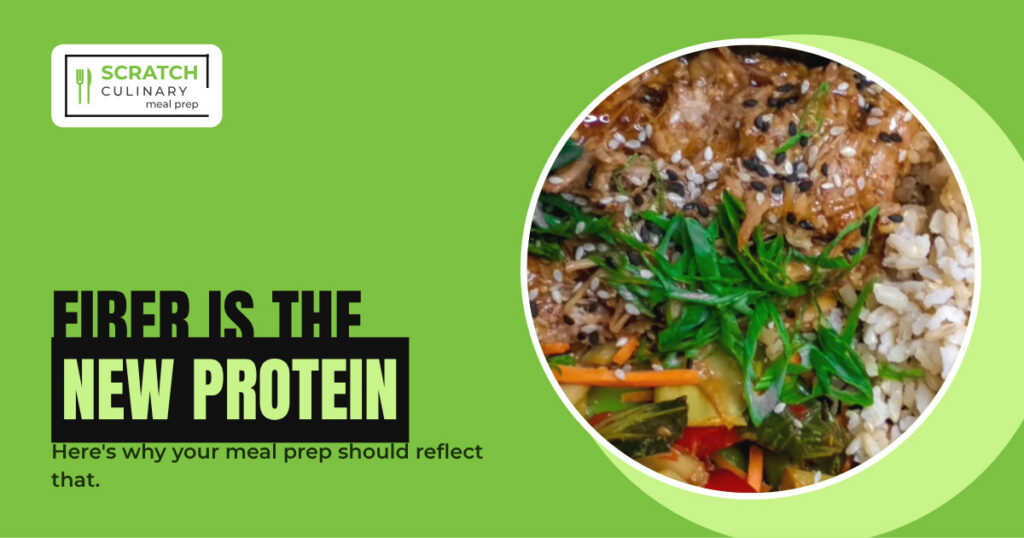
Five years ago, protein took over the nutrition conversation. Every label led with grams, every meal was engineered around the number, and “high protein” became shorthand for healthy. Fiber is doing the same thing right now.
High fiber food searches crossed 1 million per month in 2026 and are still climbing. Psyllium husk searches are up 82 percent year over year. The question worth asking is whether people are reaching for the right solution.
Why Fiber Is Having Its Moment
A few things converged to push fiber from digestive footnote to front-of-label priority.
Gut health research went mainstream. The science connecting fiber intake to a diverse, healthy microbiome is now common knowledge, and “prebiotic” belongs on grocery store packaging. Longevity research reinforced it, with consistent fiber intake linked to reduced cardiovascular risk, better blood sugar regulation, and lower rates of colorectal cancer. GLP-1 medications sent it into overdrive. Constipation is the number one reported side effect of Ozempic and Mounjaro, and the fix is not a pill. It is fiber from food.
Most American adults still get only 15 to 17 grams of fiber per day against a recommended 25 grams for women and 38 grams for men. The gap is wide and the awareness is catching up fast.
What Fiber Actually Does in Your Body
Fiber comes in two forms and both matter.
Soluble fiber dissolves in water, forms a gel in the digestive tract, and slows the absorption of glucose and cholesterol. It feeds beneficial gut bacteria directly and acts as a prebiotic that supports the microbiome. Insoluble fiber does not dissolve. It adds bulk, moves food through the gut efficiently, and prevents the sluggishness and discomfort that GLP-1 users know well.
A diet built around whole food sources delivers both types naturally. The highest concentrations come from legumes, cruciferous vegetables, leafy greens, berries, and whole grains. Foods that are minimally processed carry fiber intact. Foods that go through extensive manufacturing lose most of it.
Why the Supplement Aisle Is Not the Full Answer
Psyllium husk and fiber gummies work. They are also a workaround for a diet that is not doing the job on its own.
Whole food fiber comes packaged with vitamins, minerals, phytonutrients, and water content that isolated supplements do not replicate. The gut responds differently to fiber from a bowl of vegetables and legumes than it does to a scoop of powder in water. Research on microbiome diversity reflects this consistently. Supplements fill gaps. Food builds the foundation.
How Scratch Culinary Delivers It
Chef Tom D’Ambrosio, a Food Network Chopped Champion, builds every Scratch Culinary meal around locally sourced produce and whole ingredients with no preservatives. The produce arrives with its fiber intact because nothing in the preparation strips it out.
The fall menu brings this to every delivery. The Greek Chicken Bowl layers greens and whole grain rice together with grilled chicken. The Pork Fried Rice builds fiber into every component. The Turkey Bolognese Pasta carries fiber from both the sauce base and the pasta itself. These are not fiber-fortified products. They are meals made from real ingredients that deliver fiber because that is what real food does.
Macros are printed on every container, and the MyFitnessPal barcode integration logs fiber content automatically alongside protein and calories. Fresh deliveries every Monday and Wednesday across Phoenix from Carefree to Queen Creek and Surprise to Buckeye, at around ten dollars per meal.
See this week’s menu here and get started today. Real fiber from real food. No powder required.
Frequently Asked Questions
Why is fiber trending in 2026?
Three things converged: mainstream gut health awareness driven by microbiome research, longevity data linking consistent fiber intake to cardiovascular and metabolic health, and the GLP-1 medication wave where constipation is the number one reported side effect and dietary fiber is the most effective intervention. High fiber food searches now exceed 1 million per month in the US.
How much fiber does an adult need per day?
The recommended daily intake is 25 grams for women and 38 grams for men. Most American adults consume only 15 to 17 grams per day. Distributing fiber across multiple whole food meals throughout the day is more effective than trying to hit the daily target in one sitting.
Is whole food fiber better than fiber supplements?
Whole food fiber delivers soluble and insoluble fiber alongside vitamins, minerals, phytonutrients, and water content that supplements do not replicate. Research on gut microbiome diversity consistently shows stronger responses to fiber from whole food sources. Both have a role, but food-first is the stronger baseline.
Does Scratch Culinary include fiber content on the meal label?
Yes. The full nutritional breakdown including fiber is printed on every container and is available via MyFitnessPal barcode scan for automatic logging.
Does Scratch Culinary deliver in Phoenix?
Yes. Scratch Culinary delivers every Monday and Wednesday across the Phoenix metro area including Scottsdale, Tempe, Mesa, Gilbert, Chandler, Glendale, and Peoria, from Carefree to Queen Creek and Surprise to Buckeye. Kitchen pickup is also available at the Phoenix location.
Scratch Culinary is Phoenix’s chef-driven, subscription-based meal prep and delivery service. Seriously fresh. Nutritionally focused. Made from scratch, every week. Serving the entire Phoenix metro area including Scottsdale, Tempe, Mesa, Gilbert, Chandler, Glendale, Peoria, and beyond.